Arica Toxic Waste Case Study
How illegal toxic waste dumping by a Swedish mining company devastated a Chilean city, and the bioremediation solutions that could help restore the contaminated land.
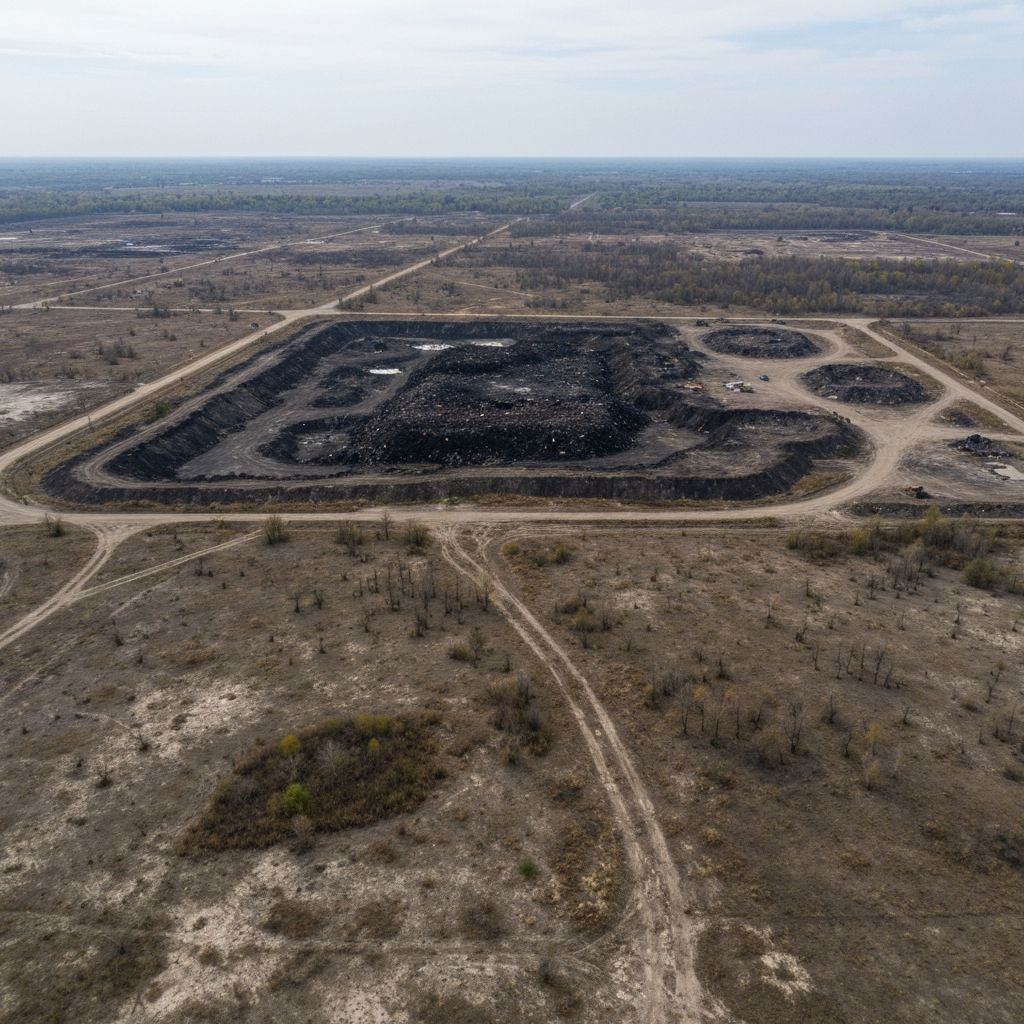
Arica, Chile's northernmost city, has seen its poorest districts contaminated with high concentrations of toxic metals, including lead and mercury. In 1985, the Swedish mining company Boliden began exporting toxic mining waste to Chile. The reasoning for this action was twofold: Boliden wished to avoid the restrictions on toxic waste exportation that would soon be passed with the Basel Convention on the Control of Transboundary Movements of Hazardous Wastes and Their Disposal in 1989, while simultaneously claiming that a Chilean mining and processing company, Promel Ltda, would process the waste and extract the remaining gold, silver, and arsenic. However, Promel did not have the capacity to carry out this operation and instead dumped the waste on the outskirts of Arica.
All of these actions were illegal. The Swedish Environmental Protection Agency, which prohibits the exportation of toxic waste, was aware of Boliden's actions, yet they were not addressed. The Chilean authorities received false information about the contents of the waste, as Promel claimed it was non-toxic. Both Chile's border and sanitation authorities were negligent in their investigations, allowing the toxic waste to make its way to Arica.
The waste was dumped in Sitio F, on the eastern side of the city near many low-income communities, from 1985 to 1989. In total, almost 20,000 tons of mining waste containing lead, mercury, arsenic, and cadmium, among other heavy metals, were dumped. The toxic metals stayed in the water and soil for years, and ill health effects were discovered among the neighborhood's population in the mid-1990s, especially children who used the dump as a playground unaware of its toxic effects, and the elderly.
Physical health problems included pain in the joints and bones, conjunctivitis, allergies, anemia, respiratory issues, and cancer. For pregnant women, miscarriage and birth defects became more common along with a rise in infertility. In addition, citizens of Arica suffered mental and psychological issues like irritability, neuroses, stress, memory loss, tiredness, and chronic fatigue. These dangerous toxins had reached 5,000 people by 1998 and an estimated 12,000 by 2019.
As a result of an internal investigation, the waste was relocated in 1998 from Sitio F to a location known as Quebrada Encantada, or Enchanted Ravine, about 650 meters from Cerro Chuño. It was supposed to be a temporary relocation until a safe storage location was sourced. However, the waste remains uncovered at this site.
A few residents brought the case to court in the late 1990s, and even fewer saw success in the court system. Despite the passage of new laws intended to fix the environmental contamination, an internal audit in 2007 revealed that the requirements of these agencies were not being met. The Chilean government oversaw the destruction of about 1,000 homes and rehoming of residents in the Cerro Chuño area, but the majority still occupy the area. Migrants, indigenous people, and asylum seekers have also continued to occupy the abandoned areas where they have no need to pay rent or electric bills, and thus have no legal protection against the toxic contamination.
In 2013, a group of Arica residents took the case to the Swedish Court of Appeals, where they were denied a trial. It was determined that the case was time-barred, as it had been almost 35 years since the waste was dumped. This is an obvious breach of the European Convention on Human Rights, which guarantees the right to a fair trial. The organization of Arica citizens that originally took the case to court is now bankrupt, as they were unable to pay the 3.5 million euros demanded of them by Boliden for legal fees. Boliden representatives allegedly threatened the citizens' lawyers with the fees, intended to dissuade them and others from bringing similar suits in the future.
Not only do heavy metals in the water have detrimental effects on human health, they also cause significant harm to marine ecosystems. Mercury, cadmium, lead, and arsenic are highly toxic even at low concentrations. In the presence of heavy metals, fish experience reduced hatching rates and lead accumulation in their organs. Additionally, as intoxicated fish move up the food chain through the trophic levels in a process called biomagnification, the heavy metals pose health risks for all of those organisms. This can lead to a loss in marine biodiversity. Heavy metals in the water are not biodegradable by bacteria or other organisms and therefore continuously affect the underwater environment.
There are many new methods for toxic waste removal and it is possible to entirely decontaminate the area; however, these methods have not been implemented in Arica. The Environmental Protection Agency has provided many suggestions for cleaning up heavy metals in the water and soil. One idea is the complete excavation of the affected area, though this simply moves the waste elsewhere. They have also suggested adding chemicals to the soil to stabilize the heavy metals, which will form minerals that can be absorbed by plants in a process called phytoremediation.
Utilizing the bacteria E. coli is another solution for the removal of toxic metals, specifically mercury. Genetically modified strains of E. coli can absorb high amounts of mercury, removing it from important resources such as water.
White rot fungi (WRF) has proven valuable in bioremediation of heavy metals from the environment. Heavy metals can bind to WRF cell walls because of interactions with functional groups such as OH, NH, C-H, and COOH in a process called bioabsorption. Via biomineralization, WRF can convert heavy metals into less toxic forms, such as reducing hexavalent chromium (Cr6+) to trivalent chromium (Cr3+). Some WRF strains can also store heavy metals inside their cells in vacuoles. Using these methods, WRF are able to remediate high amounts of lead, cadmium, chromium, copper, mercury, uranium, and nickel.
Introducing WRF to the water and land of Arica would require additional research. It is necessary to test strains of WRF in conditions that mimic the waters and land of the toxic dump. Small-scale trials will likely need to be carried out in a controlled area before WRF can be deployed on a larger scale. As this method is biological remediation, fungal strains local to Arica should be used to minimize the risk of WRF becoming an invasive species. Studies show that combining different remediation techniques would yield the best results.
Although the situation in Arica looks bleak, merit exists in imagining a town that is toxic metal waste free. If the Chilean government is able to devote time and effort to enforcing one of these scientific plans, the community potential in Arica is exponential.