Sustainable Aquaculture with Dr. Steven Hall
An interview with Dr. Steven Hall about the future of sustainable aquaculture, from fish farming robots to oysters as natural water filters.
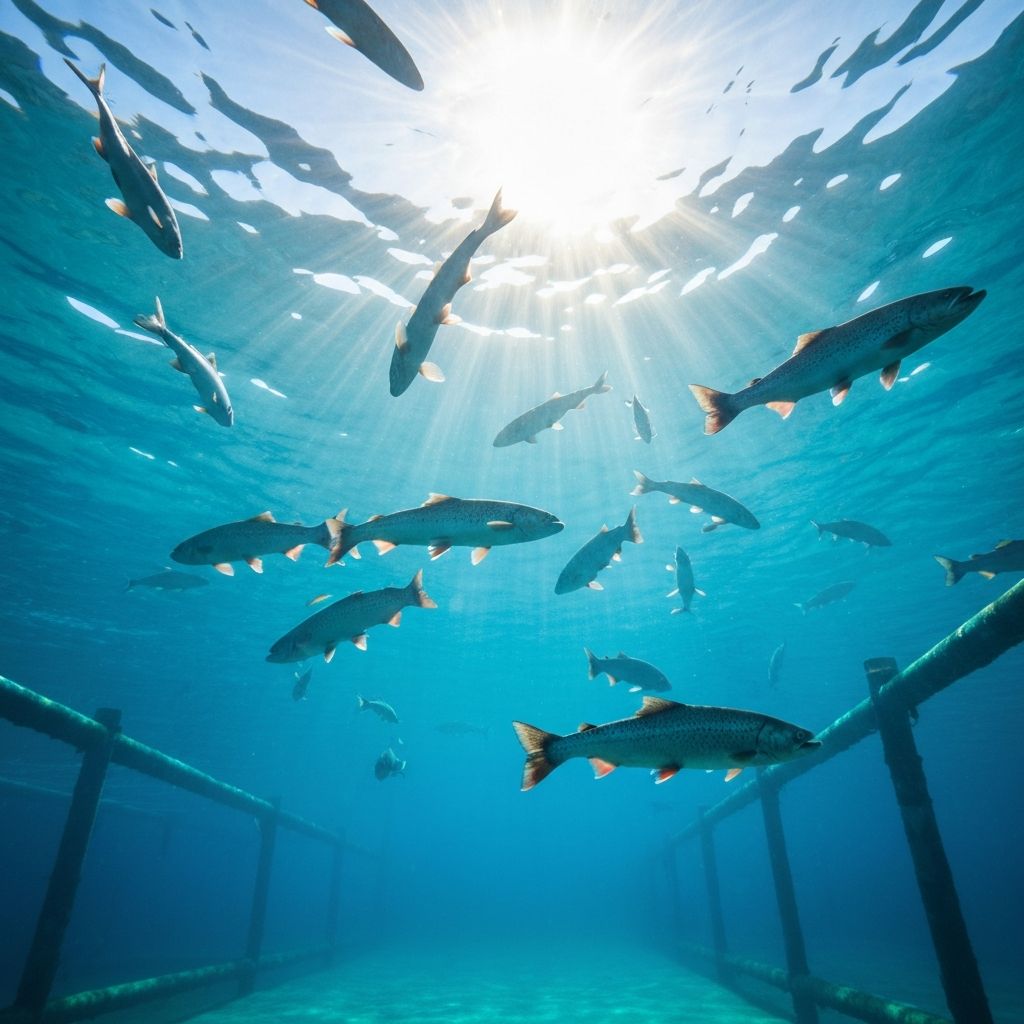
When most people think of seafood, they picture the fish on their plate. But for Dr. Steven Hall, the story of seafood begins far beneath the surface in the complex and connected world of aquaculture. I recently had the opportunity to speak with Dr. Hall, a professor at North Carolina State University, who has spent decades researching how to make aquaculture more sustainable. His work brings together technology, biology, and environmental protection in ways that are reshaping how we think about seafood. From aquaculture robots to oysters as natural water filters, Dr. Hall shared an exciting vision for how we can feed a growing world while protecting our oceans.
According to Dr. Hall, aquaculture is now the fastest growing source of protein in the world. Today, farmed fish provide more seafood than all wild-caught fish combined from rivers, lakes, and oceans.
One reason fish are so important is their efficiency. Dr. Hall explained that fish have an extremely high feed conversion ratio, or FCR. Unlike cows, which may require around 20 pounds of feed to produce one pound of meat, fish convert a much larger portion of what they eat directly into body mass. In many ways, fish are nature's most efficient protein producers. However, as aquaculture continues to expand, a major question remains: How can we increase production without harming the environment? For Dr. Hall, the answer lies in smarter, data-driven farming and sometimes even a bit of futuristic technology.
Imagine small, lightweight robots moving through underwater farms, checking water quality, monitoring fish health, and helping with feeding. This is not science fiction. It is part of Dr. Hall's current research. With support from the National Science Foundation and the USDA, his team is developing affordable and energy-efficient robots designed specifically for aquaculture.
Rather than creating expensive, industrial-scale machines, Dr. Hall's team focuses on simple, practical tools. As he explained, if you are selling fish for three dollars a pound, you cannot afford a million-dollar robot. Instead, his group works on co-robotics, where robots assist human farmers instead of replacing them.
One major innovation from his team is ShellCast, a forecasting app for shellfish farmers. ShellCast works like a weather app but for water quality. It uses data to predict when conditions are safe or unsafe for harvesting shellfish and gives farmers a simple green, yellow, or red signal to guide their decisions. Dr. Hall's approach to technology is clear: automation should support people, not replace them. As he put it, we should neither be afraid of AI nor see it as a savior. It is a tool. Use it wisely.
To Dr. Hall, oysters are far more than just seafood. They are powerful ecosystem engineers. Oysters act as natural water filters, with a single oyster capable of filtering up to 50 gallons of water per day. In places like the Chesapeake Bay, large oyster reefs can filter the entire bay's water in just a few days.
Oysters also help store carbon in their shells, which are made of calcium carbonate, and they build reefs that provide habitat for young fish. These reefs reduce coastal erosion and help protect shorelines from storm surge. Dr. Hall explained that there is an important difference between wild oysters and cultured oysters. Wild oyster reefs are essential for ecosystem health and coastal protection, while farmed oysters provide a sustainable food source that reduces pressure on wild populations. The key, Dr. Hall emphasized, is finding balance by restoring wild reefs while also responsibly farming oysters for food.
Climate change adds another layer of challenge to aquaculture. Warming waters and ocean acidification threaten many marine species, raising concerns about the future of seafood production.
Dr. Hall explained that while some species are highly sensitive to small changes in pH, oysters are relatively resilient. Research has shown that oysters can survive in conditions with much lower pH than what is predicted for future oceans. However, he noted that an even greater threat may be stronger and more frequent coastal storms. These storms can destroy oyster reefs, damage fish farms, and put coastal communities at risk.
Because of this, Dr. Hall supports nature-based solutions, such as restoring oyster reefs, instead of relying only on seawalls. Unlike hard infrastructure, oyster reefs grow over time, provide habitat, and help protect coastlines in a more sustainable way.
One of the most interesting ideas Dr. Hall shared is precision aquaculture. Similar to precision agriculture on land, this approach uses sensors, underwater cameras, and data analysis to give fish and shellfish exactly what they need. No more and no less.
Precision aquaculture is about getting the right amount, in the right place, at the right time, Dr. Hall explained. This reduces waste, lowers environmental impact, and improves animal health. While automation sometimes raises concerns about job losses, Dr. Hall stressed that people will always remain central to aquaculture. His goal is not to remove humans from the system, but to give them better tools to make smarter decisions.
At the end of our conversation, I asked Dr. Hall what he wished more people understood about aquaculture. His answer was simple and powerful: aquaculture is fundamentally a sustainability enterprise. It is about producing healthy, affordable food in a way that protects our environment.
As the global population grows and climate change puts increasing pressure on natural ecosystems, sustainable aquaculture could play a major role in feeding the world. But success depends on doing it responsibly, with careful use of technology, strong environmental protections, and respect for coastal ecosystems. Dr. Hall and his team are showing that it is possible to grow more seafood while also protecting the oceans, one fish, one oyster, and one smart innovation at a time.