Marine Darkwaves
New research reveals that entire coastal seafloors can suddenly be plunged into darkness for days or months, threatening kelp forests, seagrass meadows, and coastal ecosystems.
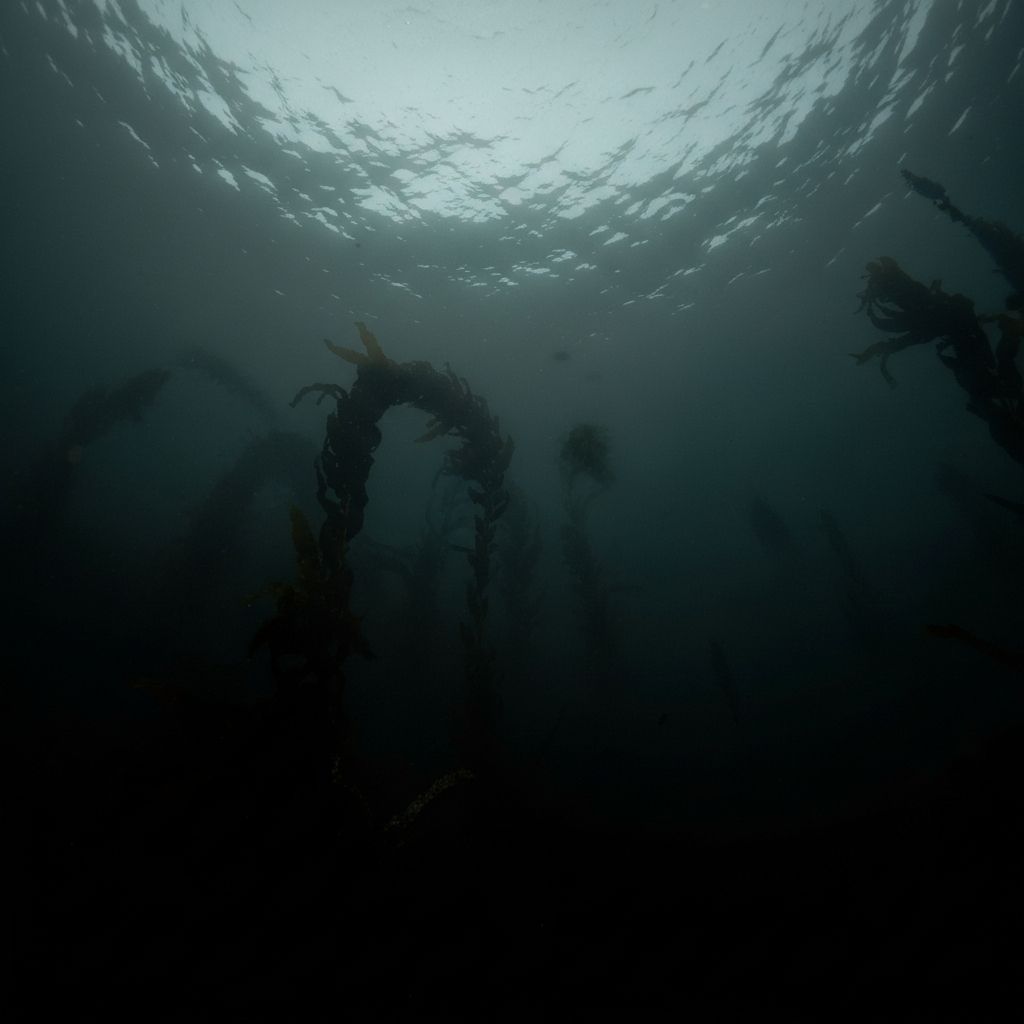
At first glance, the ocean can look calm and bright, even on days when something very different is happening below the surface. New research shows that entire coastal seafloors can suddenly be plunged into darkness for days or even months at a time. These underwater blackouts, known as marine darkwaves, are an emerging threat that scientists are only beginning to fully understand.
Marine darkwaves occur when storms, sediment runoff, algae blooms, and organic material cloud the water so intensely that sunlight can no longer reach the bottom. While this loss of light is invisible from shore, its effects can be severe for marine ecosystems that depend on photosynthesis.
Light is essential for many coastal habitats. Kelp forests, seagrass meadows, and other photosynthetic organisms rely on sunlight to grow and survive. When light levels drop, photosynthesis slows, growth declines, and entire ecosystems can become vulnerable. Marine darkwaves can therefore weaken the foundation of coastal food webs.
To better understand these events, researchers developed the first standardized framework to identify and compare extreme reductions in underwater light. Using long-term data from coastal California and New Zealand, the team found that marine darkwaves are more common and more intense than previously recognized. In some locations, the seafloor experienced near-total darkness for extended periods.
These events are not just short-term disturbances. Even brief reductions in light can weaken kelp and seagrass, making them less resilient to other stressors. Longer darkwaves can lead to significant ecosystem changes, including shifts in fish behavior and habitat loss. Because kelp forests and seagrass beds support biodiversity, protect coastlines, and store carbon, their decline can ripple through the entire coastal system.
Marine darkwaves also add a new layer to how scientists monitor ocean health. Alongside marine heatwaves, deoxygenation, and acidification, sudden light loss represents another form of acute environmental stress. Together, these pressures can compound, making recovery more difficult for already stressed ecosystems.
As climate change increases storm intensity and land-based runoff, marine darkwaves may become more frequent. Understanding and tracking these events can help scientists and coastal managers respond more quickly to emerging threats. Protecting water clarity is not just about visibility. It is about preserving the light that powers some of the ocean's most important ecosystems.