Microplastics and the Ocean's Carbon Cycle
How tiny plastic particles circulating throughout the oceans may be interfering with the ocean's ability to absorb and store carbon dioxide.
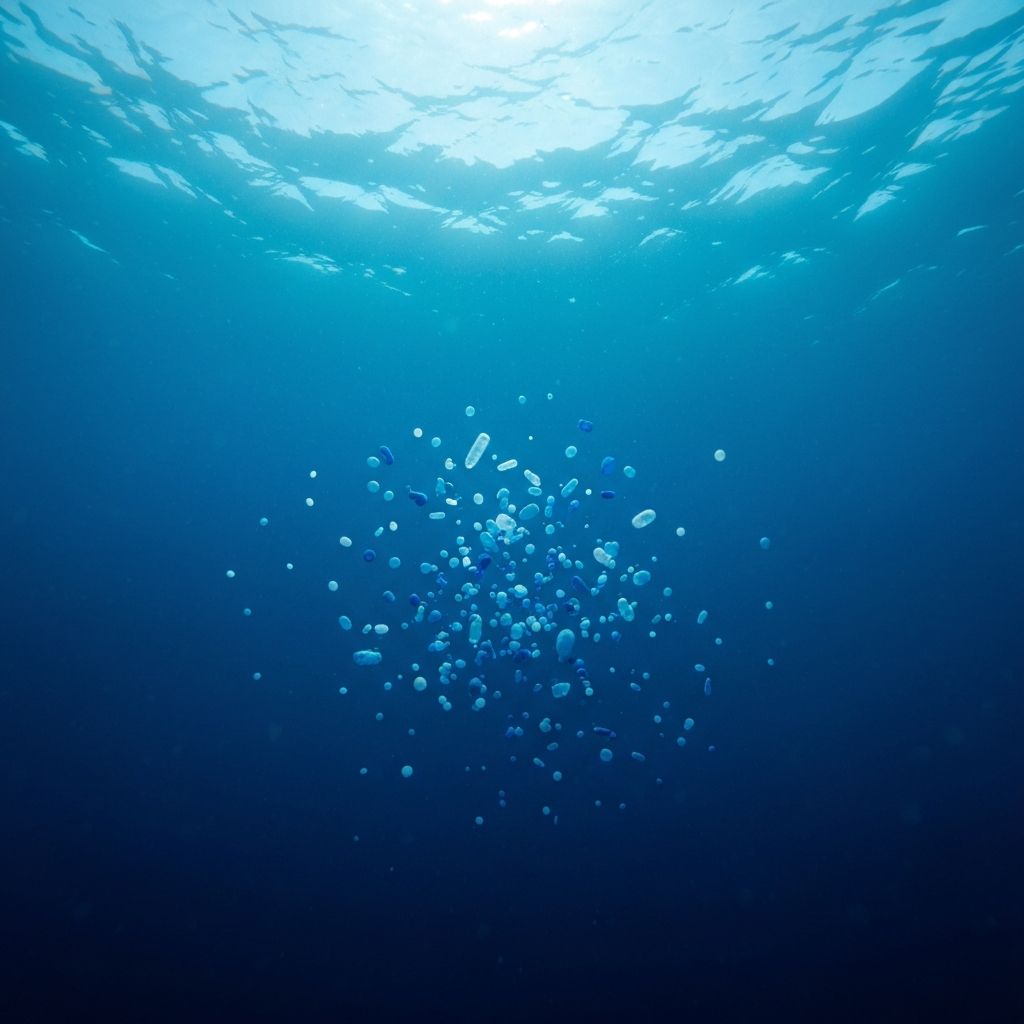
When people think about climate change, they usually focus on fossil fuels, forests, or melting ice. But new research suggests that another, less obvious factor may also be weakening Earth's natural climate defenses. Microplastics, tiny plastic particles that now circulate throughout the oceans, may be interfering with the ocean's ability to absorb and store carbon dioxide.
The ocean is the largest carbon sink on the planet. Through processes like photosynthesis by phytoplankton and the movement of organic material into deep waters, the ocean removes large amounts of carbon dioxide from the atmosphere. This system, often called the biological carbon pump, plays a critical role in regulating global temperatures. However, scientists now warn that microplastics are disrupting this natural process.
Microplastics affect key organisms involved in carbon cycling, including phytoplankton and zooplankton. When these organisms are stressed or impaired, their ability to take up and transport carbon is reduced. In addition, microplastics quickly become coated with microbial communities known as the plastisphere. These microbes can alter nutrient and carbon cycling and may even contribute to greenhouse gas production as plastics break down.
Researchers also point out that microplastics are not just passive pollutants. As they degrade, they can release greenhouse gases directly, further contributing to climate warming. Together, these effects mean that plastic pollution may be weakening the ocean's role as a buffer against climate change.
This research highlights an important connection between two major global challenges: plastic pollution and climate change. While plastic is often discussed in terms of wildlife harm or ecosystem contamination, its influence on climate systems has received far less attention. The findings suggest that reducing plastic pollution is not only an environmental issue, but also a climate strategy.
As plastic production continues to rise and microplastics accumulate in marine systems, their long-term impact on ocean carbon cycling could become increasingly significant. Addressing plastic waste, improving waste management, and reducing single-use plastics may therefore help protect one of the ocean's most important climate functions. Protecting the ocean from plastic pollution is not just about cleaner beaches. It is also about protecting the planet's ability to regulate its own climate.