Phenotypic Plasticity on the Rocky Shore
An interview with marine ecologist David Smith about how snails and crabs adapt their shells and claws in response to predators and environmental changes.
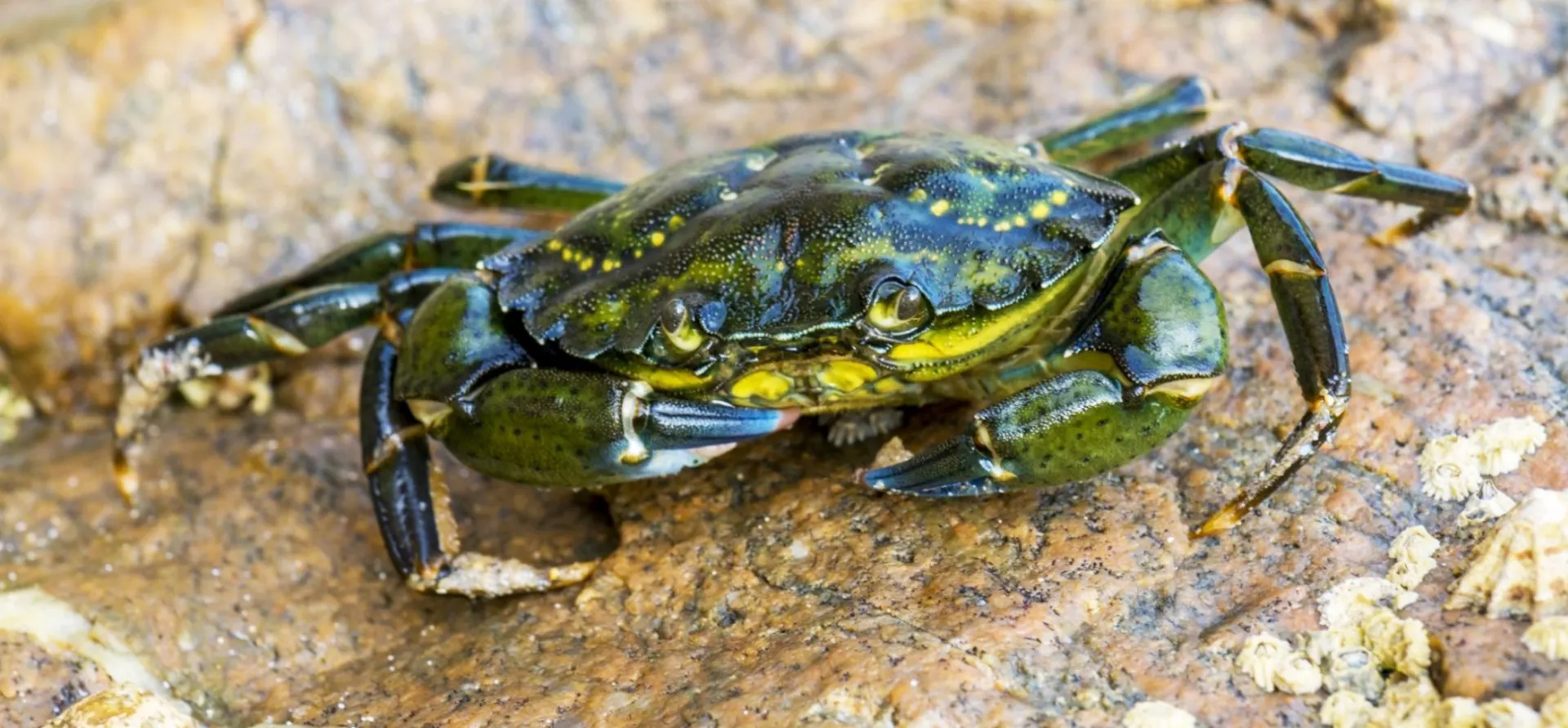
Last week I sat down with David Smith of Smith College, a marine ecologist whose work sits at the intersection of waves, predators, and chemistry. Smith studies phenotypic plasticity, which is the ability of a single genotype to produce different phenotypes when the environment changes. In his research, that means shells and claws that literally grow differently when danger is in the water.
We often think of traits as fixed. Eye color, for example, depends largely on genes. But on a New England rocky shore, snail shells tell a more adaptive story. In quiet coves, shells often grow thicker. On wave-swept headlands, they tend to be thinner. Smith's field experiments show this is not just about where snails live. It is responsive.
When snails are moved between sites and exposed to chemical cues from crabs, which are predator scents carried by seawater, their shell investment shifts within about 45 days. When the cue is removed, the trend reverses. The same genome produces different outcomes, tuned to perceived risk.
A thicker shell reduces the chance of being crushed but slows overall growth and reduces internal space for soft tissue and eggs. Energy budgets force a tradeoff. Grow big and fast with thin walls, or fortify slowly.
Crabs also show plasticity. When they are fed hard, crush-required prey across successive molts, their crusher claws become relatively larger and stronger, with measurably higher closing force. This is essentially exercise-induced plasticity, scaled to pincers.
Temperature plays a role as well. Warmer water tends to speed up molting and amplify the claw response. Colder water dampens it.
Arthropods wear their skeleton on the outside. To grow, a crab forms a new soft exoskeleton, splits the old hard one, inflates using water, and then re-hardens. During this soft stage, which can last for days, they are extremely vulnerable.
Small crabs may molt as often as once a week. Large adults may go a year or more between molts. Temperature again sets the pace.
As oceans warm, warm-adapted species are moving poleward along coastlines. In New England, the long-established European green crab now overlaps with the newer Asian shore crab, which has a boxier body and white claws. In some areas, the Asian shore crab may out-compete the green crab. Blue crabs, which are iconic in the Chesapeake, are also appearing farther north.
From a snail's perspective, a crushing claw is a crushing claw, whether it belongs to a native or non-native species. Increased predator pressure reshapes snail behavior and growth, which then affects the algae and biofilms that snails graze. In this way, phenotypic plasticity does not just affect individual species. It reverberates through the entire food web.