Soil Nitrogen and Tropical Forest Recovery
New research shows that nitrogen levels in soil can dramatically affect how quickly tropical forests recover after deforestation, with implications for carbon sequestration.
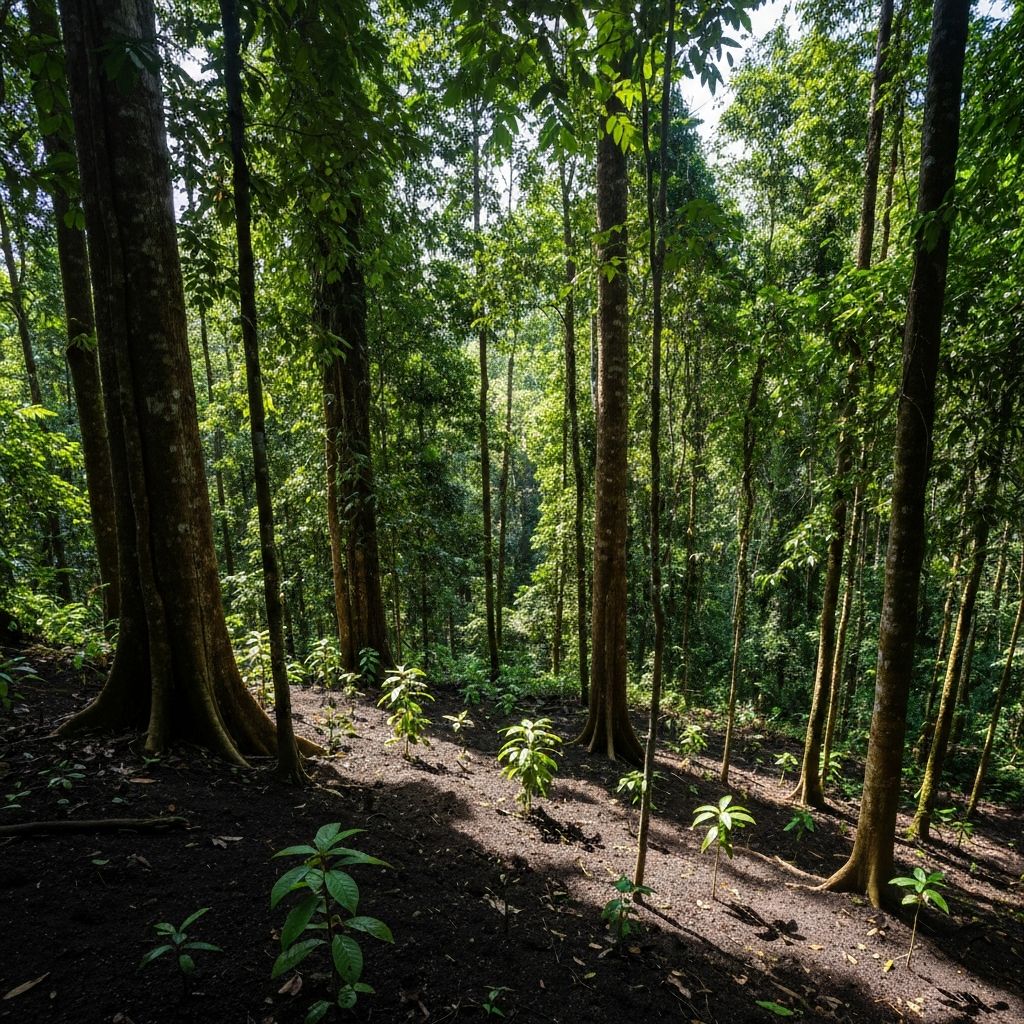
When forests are cleared, the damage is easy to see above ground. Trees disappear, carbon storage drops, and ecosystems are disrupted. But new research shows that what happens below the surface may be just as important. A recent long-term study found that the amount of nitrogen in soil can dramatically affect how quickly tropical forests recover after deforestation.
Tropical forests are some of the most important carbon sinks on Earth. As they regrow, they remove carbon dioxide from the atmosphere and store it in tree biomass. This process, known as carbon sequestration, helps slow climate change. The new research suggests that forests with enough nitrogen in their soils can regrow up to twice as fast as forests that are nitrogen limited. Faster regrowth also means faster carbon capture.
To study this, scientists monitored 76 forest plots across Central America for up to 20 years. The sites varied in age and land-use history, allowing researchers to track long-term forest recovery. Some plots received nitrogen, some received phosphorus, some received both, and others received no added nutrients. This experimental design allowed the team to directly test how different soil conditions affected forest regrowth.
The results showed that nitrogen played a major role, especially in the first decade of recovery. Forests with sufficient nitrogen regained tree biomass at roughly double the rate of nitrogen-poor forests. Phosphorus alone did not have the same effect. This highlights nitrogen as a key limiting nutrient for young tropical forests.
Importantly, the researchers do not recommend adding fertilizer to forests. Large-scale fertilization could create new environmental problems, including emissions of nitrous oxide, a powerful greenhouse gas. Instead, they suggest working with natural processes. One strategy is planting nitrogen-fixing trees, such as legumes, which naturally enrich soil. Another option is prioritizing reforestation in areas that already have higher nitrogen levels.
These findings show that smarter reforestation is not just about planting trees. It is also about understanding soil chemistry and ecosystem processes. By aligning restoration efforts with natural nutrient dynamics, forests may recover faster and play a stronger role in fighting climate change.