Touring the SEA Cramer
A behind-the-scenes look at the research vessel SSV Cramer and its scientific equipment, from CTD instruments to chlorophyll analysis labs.
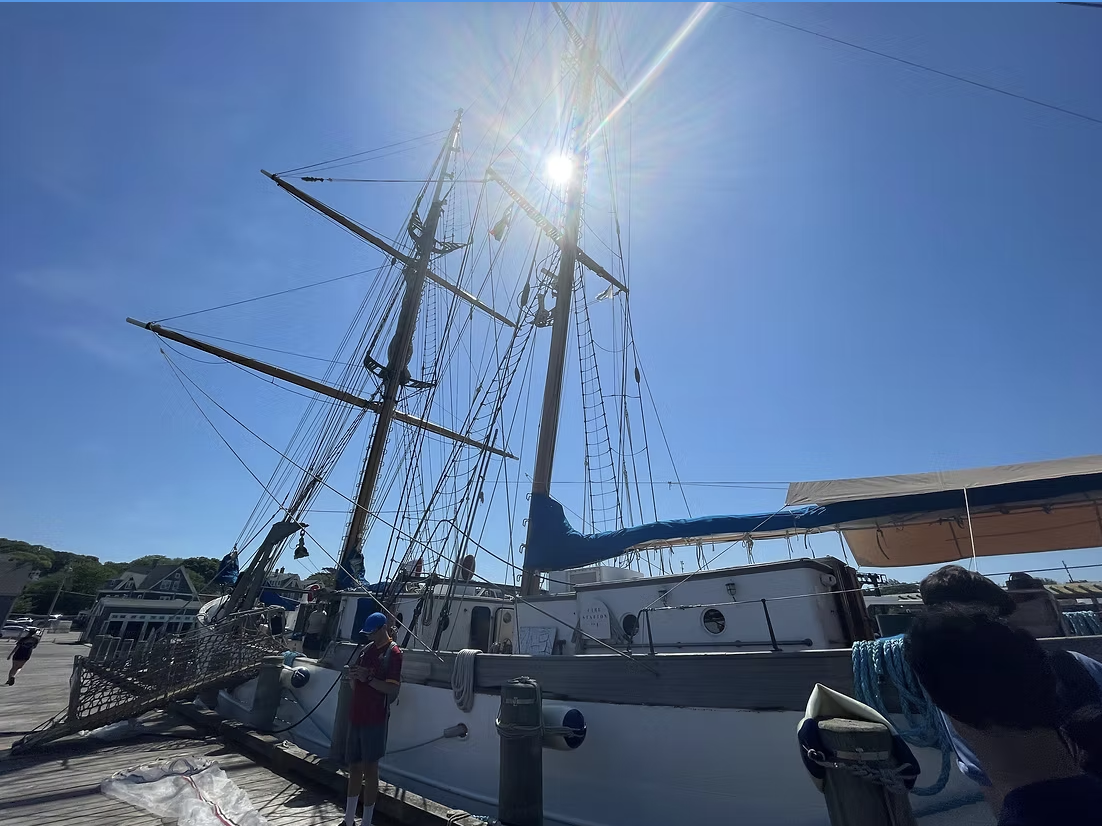
This summer, I participated in the Ocean Sciences program at the Sea Education Association (SEA) in Woods Hole, Massachusetts. There, I got to experience a variety of activities from taking chemical measurements in the salt marshes of the Cape to visiting the main ocean science labs, like the Marine Biological Laboratory and the Hiebert Marine Laboratory. But for me, the most formative experience of the entire program was touring SEA's research vessel, called The Cramer.
One of the simplest yet essential tools aboard is the bucket used for gathering samples from the ocean surface. While it may look basic, surface water samples are crucial for understanding conditions at the air-sea interface.
The CTD is lowered into the ocean, and it can measure the temperature, salinity (conductivity), and depth of the water. When it reaches a certain depth, the sampling cylinders shown above close, and scientists aboard can run tests to learn information about the ocean at that location and specific depth. Cables attached to the instrument send real-time data to a computer on board. Often, other sensors are also attached to the CTD, such as those for oxygen, chlorophyll fluorescence, turbidity, and pH, to gather additional data.
A Van Veen grab sampler is used to get a half-cylinder-shaped sample from the ocean floor. The apparatus has jaws or scoops, and when the grab sampler reaches the seafloor, the jaws shut, trapping sediment, sand, and microscopic organisms.
The Cramer also has an onboard lab to run tests on samples from the ocean. For example, above is a Chl-A analysis setup that consists of a vacuum filtration setup. The pump on the top shelf creates suction, and the funnels below (with labeled flasks "CHL a only") are where seawater is poured through special glass fiber filters. The filters trap microscopic phytoplankton and particles from the seawater. Chlorophyll-A is the major light-harvesting pigment in phytoplankton, so high Chlorophyll-A corresponds to high biomass and productivity in the ocean.
The Cramer is not just a floating laboratory but also a home for the crew during voyages. The cabins on the bottom deck serve as the space where crewmates eat, sleep, and spend their downtime. The cozy quarters feature wooden finishes, bookshelves stocked with reading material and games, and bench seating around tables.
Touring The Cramer gave me a new appreciation for the challenges and rewards of conducting research at sea. Every piece of equipment, from the simple bucket to the sophisticated CTD, plays a vital role in helping scientists understand our oceans.